
Special Education Needs (SEN) Support
Building on OAP, SEN Support provides additional, tailored help so every child can access learning and experience success at their own pace.
How SEN Support works:
Early identification
Teachers and Special Educational Needs Coordinators (SENCOs) identify barriers to learning early.
Identifying special educational needs
Schools consider the four broad areas of need outlined in the SEND Code of Practice. These areas help schools understand the type of support a child may need:
- Communication and Interaction
- Cognition and Learning
- Social, Emotional and Mental Health
- Sensory and/or Physical Needs
Planning support
Support is tailored to meet individual needs, often through a support plan.
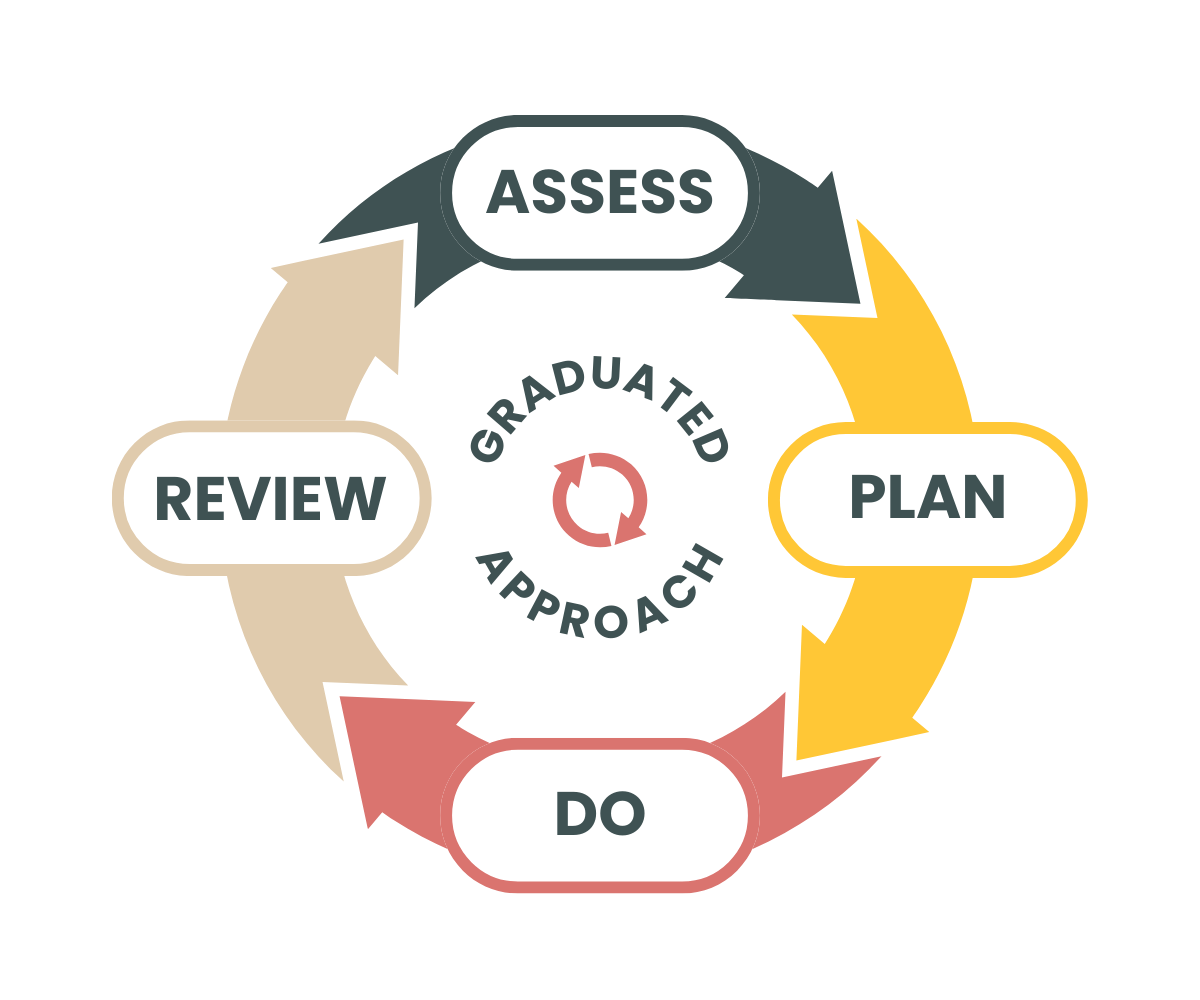
Graduated approach
Schools follow the Assess > Plan > Do > Review cycle.
Specialist input
External professionals, such as educational psychologists and speech and language therapists, may be involved when needed.
Collaborative partnership
Families and professionals work together to understand and build on the child’s strengths, needs, and aspirations.
Accessing support
To access SEN Support, contact the teacher or SENCO. They’ll guide families through the process, working collaboratively to identify needs and explain the range of support available.
Note: A formal diagnosis isn’t required. Support is based on individual needs and can begin as soon as these are identified.